
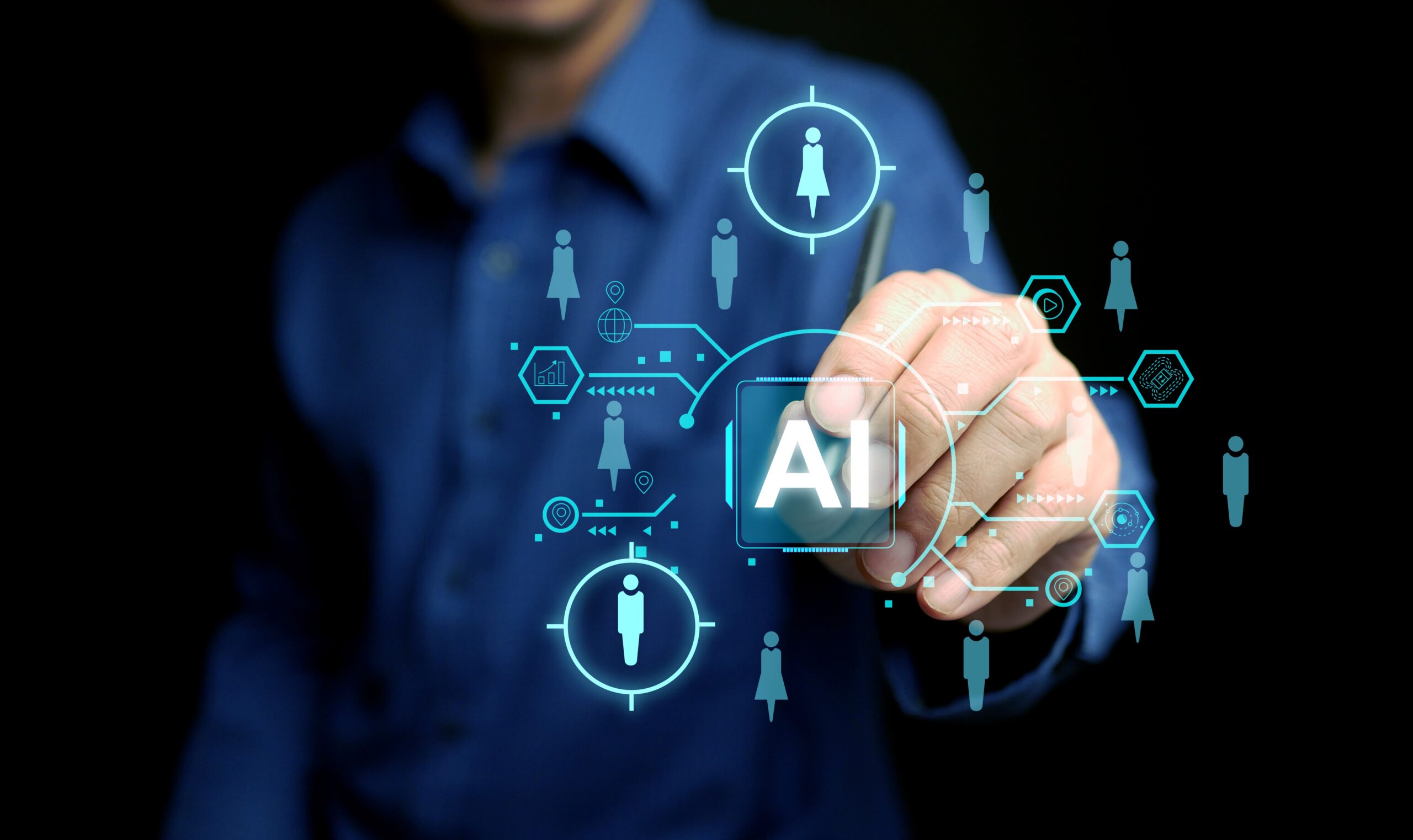
In the coming decade, few forces will reshape the world of work more profoundly than Artificial Intelligence (AI). Within people services, Human Resources (HR), and Recruitment, the integration of generative AI and agentic AI is redefining how organisations attract, develop and retain talent.
These technologies will not only automate routine tasks but also deliver real-time, data-driven insights and create deeply personalised employee experiences. As a result, business leaders and HR professionals alike will be empowered to focus on the uniquely human aspects of leadership; empathy, strategy and culture, while technology manages much of the operational complexity.

Traditional HR technology has long aimed to simplify administrative tasks: payroll processing, onboarding and performance tracking. However, generative AI goes far beyond automation. It can generate job descriptions, draft personalised learning plans, or craft tailored internal communications based on tone and intent. Agentic AI, a newer evolution, acts autonomously, able to analyse datasets, detect workforce trends and recommend actions without constant human prompting.
Imagine a system that automatically identifies skills gaps in your workforce, suggests internal mobility opportunities and develops individualised training content on demand. Recruitment platforms could use AI agents to source and screen candidates 24/7, while conversational bots guide applicants through an engaging, personalised experience. This intelligent augmentation will free leadership and HR teams to focus on talent strategy, organisational design, and culture, areas where human judgement remains irreplaceable. Hurrah!
Data-driven decision making
AI-powered analytics will provide unprecedented visibility into workforce dynamics. Predictive models can forecast turnover, assess engagement drivers and simulate how organisational changes might affect productivity or morale. This capability allows leaders to make proactive, evidence-based decisions rather than reactive ones.
Moreover, AI will enable hyper-personalisation in employee engagement. From customised career development to adaptive benefits and wellbeing programmes, employees will experience HR services that reflect their unique motivations and needs. In a candidate and people market, where purpose and personalisation drive retention, this is a powerful differentiator.
As organisations adopt these transformative technologies, it is crucial for business owners, executives and board members to approach AI adoption strategically.

If you are thinking ‘meaning what exactly?’ below is a structured consideration checklist to guide responsible and effective implementation:
Strategic alignment
- Does the adoption of AI align with the organisation’s overarching business strategy and values?
- How will AI support long-term objectives such as growth, innovation and workforce agility?
- What metrics will define success; cost reduction, engagement scores, retention or customer satisfaction?
Governance and ethical framework
- Establish a clear governance model for AI deployment, including accountability, oversight and ethical guidelines.
- Define standards for transparency; employees should understand how AI systems make decisions that affect them.
- Consider the ethical implications of data use, privacy, and potential bias in algorithms.
Legal and regulatory compliance
- Stay informed on evolving legislation around AI, data protection and employment law (e.g., GDPR, AI Act, or local employment laws).
- Conduct regular legal reviews to ensure algorithms comply with equal opportunity and anti-discrimination standards.
- Document all AI-related decision processes to demonstrate compliance and accountability.
Communication and change management
- Develop an inclusive communication plan explaining what AI adoption means for individuals and teams.
- Ensure employees understand that AI is a tool to augment, not replace their roles.
- Create feedback loops where employees can raise concerns, suggest improvements, and co-shape the transformation.
Policy development
- Update HR/people policies to define acceptable uses of AI in recruitment, performance evaluation, and employee monitoring.
- Establish guidelines on human oversight, particularly for high-impact decisions such as hiring or promotion.
- Consider union or employee network engagement early to maintain trust and collaboration.
Capability building
- Upskill HR professionals and/or responsible leaders in data literacy, AI ethics and digital fluency.
- Encourage cross-functional learning between HR, IT and data science teams.
- Cultivate a culture of continuous learning, preparing the workforce to adapt as AI capabilities evolve.
Business agility and sustainability
- Integrate AI initiatives into broader business agility frameworks, ensuring rapid adaptation to market or regulatory shifts.
- Assess the environmental impact of AI infrastructure; cloud computing, data centres and model training and adopt sustainable practices.
- Align AI adoption with ESG (Environmental, Social, and Governance) goals to enhance corporate responsibility.
Return on investment and value measurement
- Quantify both tangible (time savings, reduced turnover, hiring speed) and intangible (employee experience, innovation) returns.
- Use pilot projects to validate ROI before scaling enterprise-wide.
- Continuously review and optimise AI tools for performance, fairness and user satisfaction.
While technology will reshape HR functions, the human element remains central. The organisations that will lead in this new era are those that use AI to elevate humanity at work, creating more empa- thetic, inclusive and responsive workplaces. AI will handle the data; people will handle the meaning.
Generative and agentic AI are not simply tools; they represent a shift in how organisations think about people management. By embracing these technologies thoughtfully, businesses can transform HR from a reactive service function into a predictive, strategic partner at the core of enterprise success.
The future of people services is not about replacing humans with machines, but about enhancing human potential through intelligent collaboration.
For forward-thinking leaders, the time to prepare is now.

By Jason Sinclair, Chief Operating Officer at Profile Resourcing
Find out more about Profile Resourcing on their website.