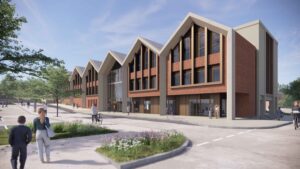


Designing a new school boarding facility complete with a helter skelter is definitely pushing the boundaries – meeting a brief to deliver a building that meets modern, low-carbon targets while remaining in keeping with its historic surroundings demands similar creativity.
MEP Concepts undertook a project at Bilton Grange Preparatory School, a feeder school for Rugby School, which has been in its current location since 1887. The current Prep School building began as a farmhouse and was redeveloped for use as a school by renowned 19th Century architect and designer Augustus Pugin. Recently, the school commissioned a state-of-the-art co-educational boarding house facility that had to blend with Pugin’s gothic buildings on the same site. The client’s brief was to deliver a low-carbon construction development with an aspiration to achieve net zero in terms of carbon emissions or as close as possible.
MEP Concepts provides clients with technical advice for building services engineering, sustainability and energy consultancy in the construction and development of property in the new build and refurbishment sectors.
On this occasion, the team were asked to come up with a solution that worked with the design, a non-standard configuration that included providing a fairytale castle with turrets and a helter skelter slide while at the same time ensuring a comfortable and modern lifestyle for boarders without compromising Pugin’s original design. The new building regulations Part L calculation methodology introduced significant challenges and one of the first tasks for MEP Concepts was to identify the implications of the new guidelines. The initial concept strategy was based on gas fired condensing boilers providing the building’s heating and hot water requirements. Use of conventional gas fired heating solutions, although proven and reliable, would not achieve the target energy performance and carbon emissions reduction required for a low or net zero carbon building. The operations team for the school were, however, equally uncertain about adopting new technology solutions for the boarding house and how these would perform in practice.
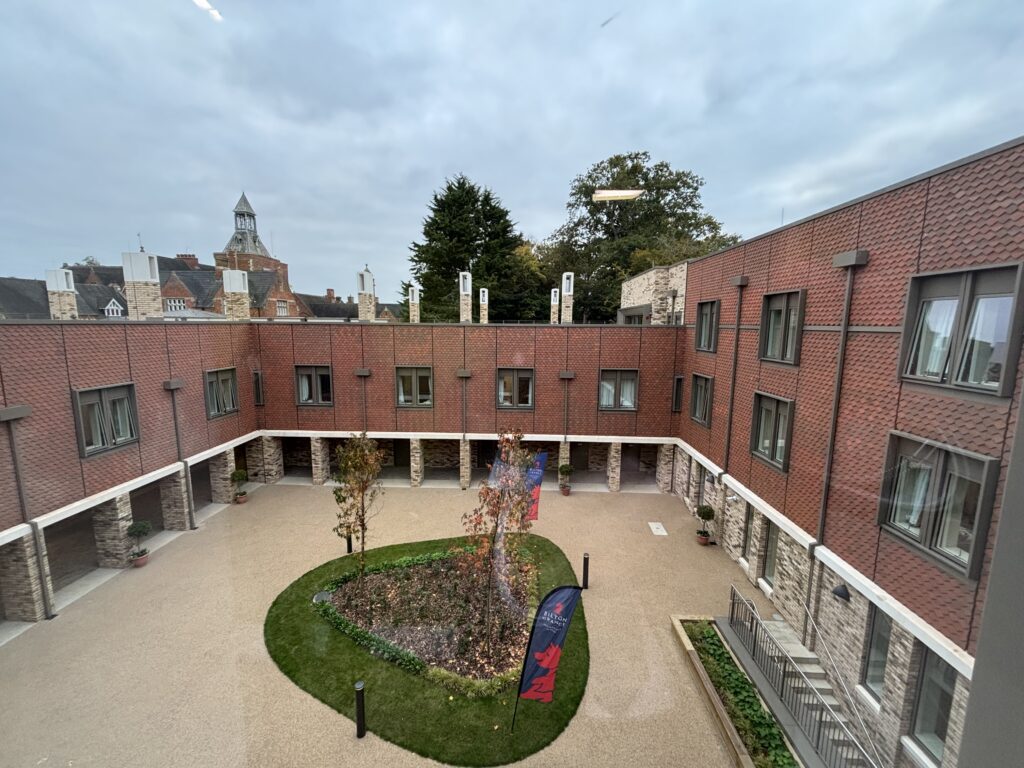

MEP Concepts Technical Director Ian Pope said: “Bilton Grange is an excellent example of how using modern methods, and the need to meet today’s expectations and requirements in terms of carbon emissions net zero aspirations, can work within even the most challenging circumstances.
“Naturally, the school wanted something in keeping with the overall appearance and history of the existing site but set out a clear goal for what they wanted to achieve in terms of sustainability.
“In our feasibility assessment, a hybrid bivalent solution using air source heat pumps linked to gas fired back-up boilers was considered as the most appropriate solution, subject to financial review, but came in over budget and so we reverted to the option of a full air source heat pump (ASHP) solution.”
The use of ASHP coupled to underfloor heating allowed the energy performance of the building to be improved without significant design risks. The developed design, however, retained gas fired hot water heating as the ASHP solution could not be proven to meet high demand at peak morning load and recharge sufficiently for the lunchtime and evening demand.
The solution was to split the heating and DHW load between the technologies. To maintain the building’s projected low carbon emission standards the application of roof mounted PV was added to improve the emissions rating and maintain the A rated EPC.
Dave Bowman, MEP Concepts Operations Director, added: “The boarding house is home to up to 80 children ranging from seven to thirteen years, so all designs had to be compliant with the specific requirements of the school whilst satisfying challenging energy reduction targets. The system solutions also had to come into an agreed budget.
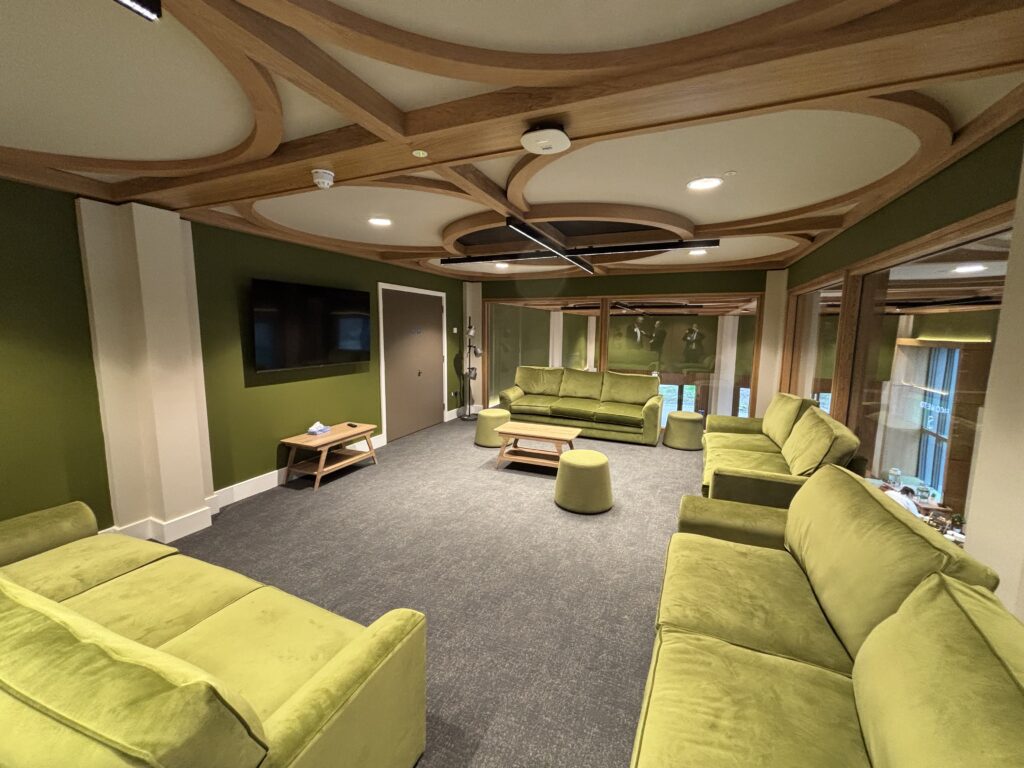
“Our solution introduced a much more carbon-efficient solu-tion compared to the standard gas boiler heating solution; using underfloor heating allowed optimised floor area without radiators or convector heaters; and our selection of an external plant area away from the building ensured noise nuisance was not an issue.
“This is an excellent example of a project where the original design aspirations were achieved, in line with cost and budget constraints, and delivered a highly efficient building in terms of carbon emissions and energy performance.”
MEP Concepts possesses a wealth of knowledge and experience in the education sector. The firm recently worked with Phil Atkins Estates Director at Bletchley Park Trust, who said: “Having worked with MEP Concepts for over five years for both Mechanical and Electrical Decarbonisation engineering, I would have no hesitation in recommending them. Their approach has always been helpful and collaborative, and we are looking forward to working with them on the next project at Bletchley Park.”
Recent works also include the full M&E building services design on the Valley SEN School for Ashe Group Ltd. Construction & Technical Director Daniel Ames said: “Ian Pope, Dave Bowman and Adam Alexander have very quickly and successfully integrated into our various project teams. Their contribution within the first scheme, where timing was an issue, enabled us to procure quickly and still maintain the target of net zero carbon in operation.”
For more information, visit the MEP Concepts website, or call on 01908 062819, or email enquiries@mepconcepts.co.uk.