

In September 2021, to meet the need for additional space as the team returned to the office after lockdown, Benchmark Architects moved into space in Victoria House in Milton Keynes.
Keen to be part of an exciting time for the city – just as the MK City Plan 2050 was being launched – the firm has found new opportunities in terms of growth and creativity. Managing Director Mark Doohan looks back on those years of growth and change, and forward, to the future of the city and the practice, as both continue to develop.

Now that the practice is established in Milton Keynes what, as an architect, are your impressions of the city?
I love it. Many outsiders think of Milton Keynes as soulless, a place without a character, but they just don’t understand it. The character is in the quality of the public realm and the modern heritage buildings. Really, there’s a lot to attract people into the city centre. Apart from the businesses, leisure and shopping, there are things like the International Festival and live music, as well as a lot of technological innovation and excellent education provision.
These are all things that attract people to live and work here, but in my opinion, the city centre is not yet densely populated enough. There are not yet enough people living and working in the centre, so I feel it hasn’t quite developed that sense of place and community you find in other cities. When you have residents from across the whole of society – students, families, older people, all living close to where the workplaces, shops, entertainment and restaurants are, you intensify and build real culture and community.
Milton Keynes is more of a destination at the moment. It was originally designed around a range of design principles and there can be, and has been, opposition to that changing. For instance, the idea that there was never going to be a building taller than the tallest tree; obviously that has changed and I think a change of approach within the city centre itself is already on its way and is needed to get the real buzz that a growing city needs.
So, how does Benchmark go about playing a part in bringing about change?
Firstly, there are organisations, like the Milton Keynes Development Partnership, that are already driving the future of the city, systematically releasing blocks of land for future development and running master-planning and design competitions.
These organisations have an important part to play and we aren’t automatically entitled to a seat at that table, but we would always want to be part of the conversation wherever we can.
It’s up to us to demonstrate that we have the projects and clients that give us the credibility to be a part of driving change, to be a practice that has expertise and experience and that can really make a difference to a project or a community.
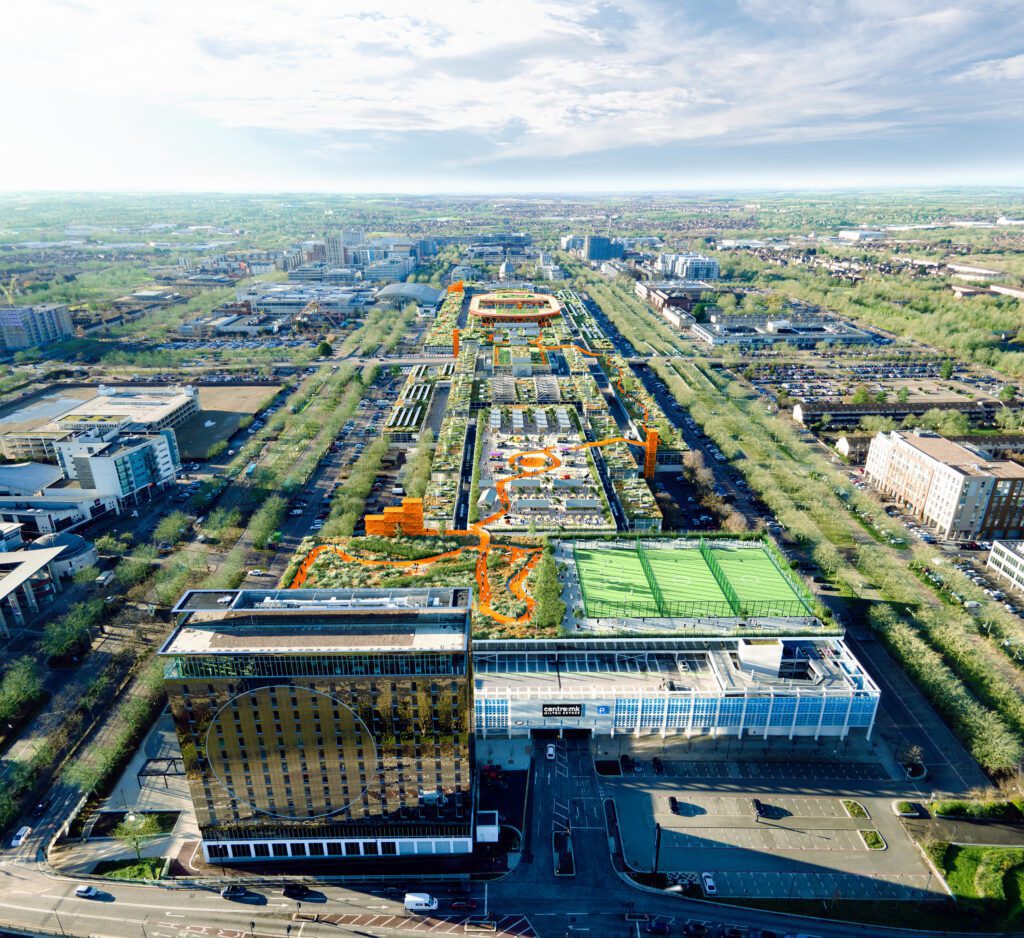
We also do slightly offbeat things, like the academic feasibility plan we put together for greening the shopping centre roof. We weren’t commissioned to do it directly, but we are interested in the creative development of the city and thought it would be a fun way to explore ideas for green spaces and leisure areas, parks and planting, on what is a very large, open space which is now visible to all with the increase in taller buildings
When it was built, Centre:MK was going to be one of the tallest buildings in the city, so the roof isn’t particularly attractive because no one was going to see it. That has changed now, so we took it upon ourselves to undertake a project showing what it could look like. It is a listed building and very important for the city, any changes like this would be difficult but it is an emotive and creative idea that can spark a reaction and a discussion.
It didn’t get a lot of traction at the time, but that’s OK, it’s just the kind of thing we do – explore the possibilities, maybe open up the discussion and be creative about the future of the city.
Is office location important for a practice like yours in the modern world?
Yes. We are committed to and invested in the success and the growth of the city. We would obviously like to see more inward investment in terms of using local design and creative firms like ours.
When Milton Keynes was first being built, everyone involved was based here, it was a Milton Keynes project. Over nearly 60 years, it has grown and developed into a big city, and now there seems to be a tendency to look outwards for new ideas and input, and I get that, but often it’s the local creative firms that work in the city and know the city that understand best what it needs.
This is also a great base for our national architecture and development projects. We’re working on major projects in places like Leeds, Leicester, London, Poole and Birmingham, so I totally understand looking to outsiders for design services, but we would love to be doing more in Milton Keynes. It’s exciting and growing and innovating and of course we want to be part of that.
What kind of projects is Benchmark working on?
We have clients all over the country, and the work is predominantly a mix of residential-led developments and large-scale mixed-use projects focusing mainly on what we call ‘bed spaces’ – purpose-built student accommodation, multi-storey residential development both private sale and build-to-rent, hotels and hospitality and mixed-use commercial.
We started out in Ampthill in 2016 and spent four or five years building up the practice. It was not long before we needed to bring in more people, once projects started to come in, so we grew quickly and brought in the expertise we needed.
The past couple of years, however, it’s been a more difficult environment in which to be growing an architecture practice. We have all been affected by factors that slowed the construction sector down – Brexit, Covid, Ukraine and the effects all that had on the economy.
But now that interest rates are stabilising and confidence is growing, the market is returning. When you deal with projects with construction values of £75m or £100m, like those that we’re currently involved in, even small fluctuations in interest rates and financial stability make a big difference, so it’s important that things are becoming more settled and we’re seeing the green shoots of recovery across the industry.
Having said that, while that has all been going on, we have developed a significant reputation as a specialist in crematoria and bereavement buildings, which is a growing market for us. It’s certainly niche, but in recent years we have been involved in the design and construction of more crematoria in this country and in Europe than any other UK practice – we’re just about to start on site a new project in Cyprus. The first crematorium in the country – and we are being asked to give keynote speeches at conferences on the subject.
How does the expertise you’ve brought into the practice feed into your work?
Architecture can be a slow burn process. It can take months, if not years, to get projects from concept, through planning to construction and then handover to a happy customer.
There are two facets to Benchmark, concept and planning, and technical and construction delivery. Architecture is about creatively designing and selling ideas but also about seeing them through to the end, making sure the design is buildable and working with other parties to deliver the appropriate quality and prevent delays along the way. It is also about bringing in experts in order to try to navigate a path of least resistance.
It’s not just about coming up with the design and presenting it; creativity is as much in making something work. Concept design is only about ten per cent of the architectural process, the rest is working with all the other players to get as close as is possible to the original design, compromising or adapting where necessary so that it ticks all the boxes for every stakeholder.
The architect is often at the heart of that process. There are so many specialisms that feed into the process of creating buildings and places, and architects have to have some understanding of all of them, bringing the different aspects together and motivating and managing all the specialisms, strategies and problem solving, and that’s what I love about it.
Find out more about Benchmark Architects on 01908 732200 or visit their website.