
A new Transport for London (TfL) report shows that the Silvertown Tunnel – opened in April 2025 – has made journeys faster and more reliable, alongside sustainability benefits including a four-fold rise in cross-river bus journeys and a notable drop in nitrogen dioxide concentrations [1].
Delivered on time and on budget, the 1.4km tunnel opened on 7 April last year, becoming the first new road Thames crossing east of London’s Tower Bridge in 33 years. Connecting Silvertown to the Greenwich Peninsula in east London, the objectives of the scheme include boosting network performance and resilience while supporting economic and population growth, providing improved cross-river transport links and managing congestion in the area through road user charging.
Latest monitoring data from the first year of operation shows that the road network is more resilient and reliable, improving journeys for local businesses and essential freight. As well as providing a new cross-river route, the Silvertown Tunnel has reduced congestion in other areas, with quicker journeys through the Blackwall Tunnel at all times in both directions and a 23 per cent reduction in the number of over-height vehicle incidents at the Blackwall Tunnel.
For those travelling on the A102 northbound approach to the Blackwall Tunnel from Sun in the Sands, peak journey times have reduced by 58 per cent in the morning and 47 per cent in the evening. Weekday cross-river traffic using both tunnels remains lower than the pre-opening levels seen at just the Blackwall Tunnel with analysis of the wider road network showing overall stable traffic volumes on key corridors of the A2, A12 and A13.
Without the Silvertown Tunnel, it was predicted that air quality in the area would get worse alongside congestion – but monitoring reveals that nitrogen dioxide concentrations have decreased by 17 per cent on average compared with the year before the tunnel opened, helping Londoners breathe cleaner air. The nitrogen dioxide concentrations measured in the year since the tunnel opened were significantly below thresholds set by the UK Air Quality Strategy, with the highest average concentration being 26.3 µg/m3 – well under the annual limit of 40 µg/m3.

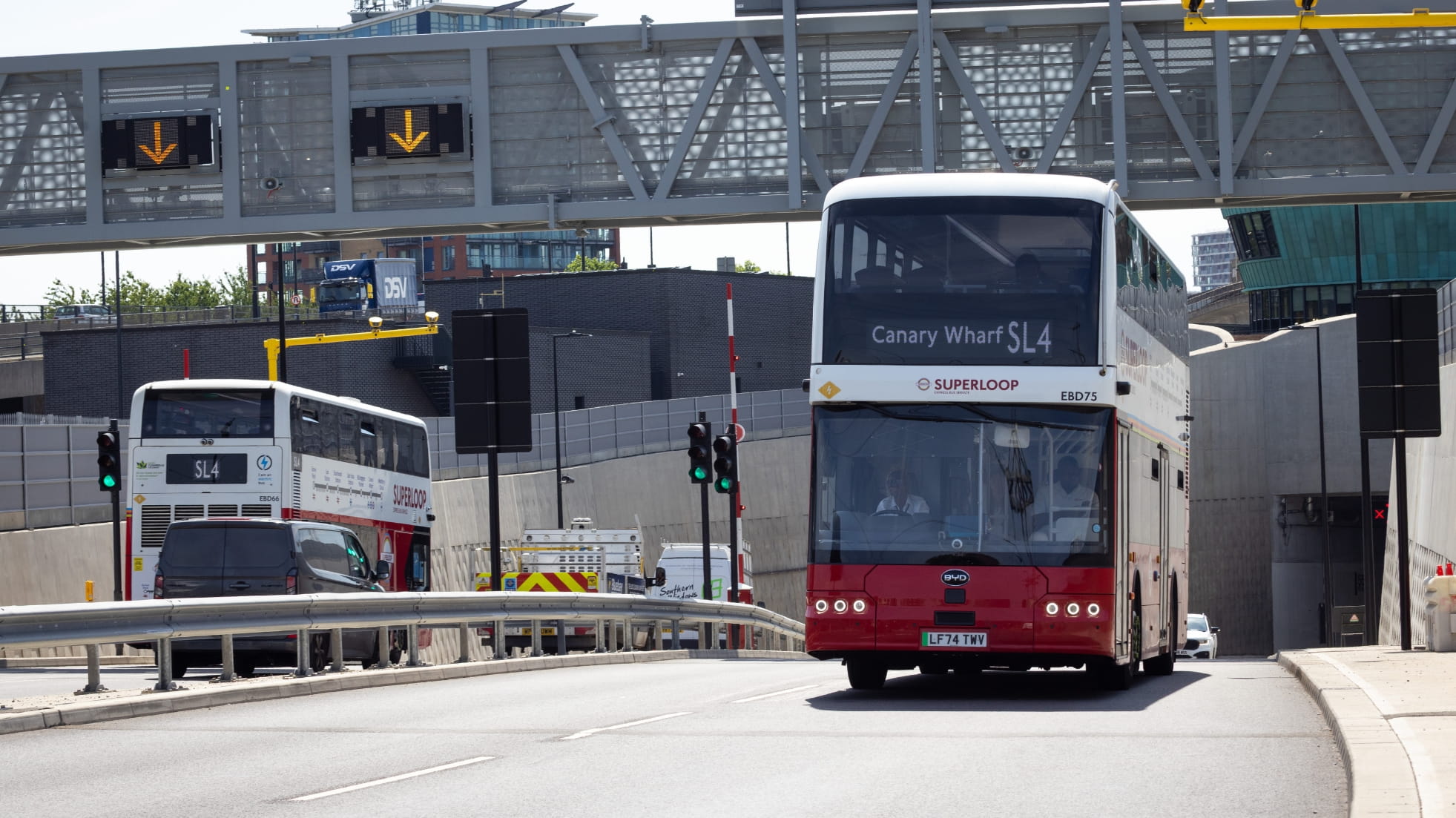
New double-deck, zero-emission buses are making use of the dedicated bus and HGV lane through the Silvertown Tunnel. More than 30,000 journeys are being made each day across the new SL4 and extended 129 routes through the new tunnel as well as the existing 108 service through the Blackwall Tunnel. It is estimated that around a third of these journeys cross the river through the two tunnels – up 290 per cent on the year before – meaning more than one in ten (11 per cent) cross-river trips through the two tunnels are made by public transport. The route 108 has also become more reliable, with shorter waits and journey times [2]. These bus routes complement the free cycle shuttle service between North Greenwich and Royal Docks, which sees an average weekday demand of around 100-130 cyclists, supporting London’s cycling boom and encouraging sustainable travel across the capital.
All journeys on bus routes through the Silvertown and Blackwall Tunnels were free until 26 May 2026, with more than 10 million journeys making use of the free travel offer on the Silvertown Tunnel bus network in its first year. Cross-river trips on the Docklands Light Railway (DLR) were also made free, with an average of 5,025 DLR free trips each week and more than 260,000 over the year.
To manage traffic demand, minimise environmental impacts and ensure the new tunnel achieved its objectives, TfL was required to introduce user charges for both the Blackwall and Silvertown Tunnels, which analysis shows have been working successfully [3]. Tunnel charges will increase in line with inflation from 21 September 2026 while existing discounts for eligible residents, businesses and Blue Badge holders will remain in place.
Mayor of London, Sadiq Khan, said: “This analysis shows that the Silvertown Tunnel is proving a success, not only cutting journey times but encouraging more sustainable transport so we can keep cleaning up our air. I’m particularly pleased to see major reductions in congestion at the Blackwall Tunnel benefitting businesses and local residents. The Silvertown Tunnel is already transforming travel across the Thames as we continue building a greener, fairer, better London for everyone.”
Alex Williams, Chief Customer and Strategy Officer at TfL, said: “It’s excellent to see that the Silvertown Tunnel is successfully achieving what it set out to do – improving the resilience of the road network and reducing congestion, with air quality improving. By making it easier to travel by bus across and near the river, we’re also seeing a surge in customers choosing to travel more sustainably. With more reliable journeys, improved access to public transport and reduced emissions, the tunnel is delivering real benefits for people and businesses on both sides of the river.”
Edward Richardson, BusinessLDN’s Transport Programme Director, said: “It’s great to see that the Silvertown Tunnel is helping to reduce congestion, improve air quality and boost cross-river connectivity in the area. This highlights the important role that partnership between the public and private sectors has to play in delivering the infrastructure that Londoners and businesses across the capital need.”