
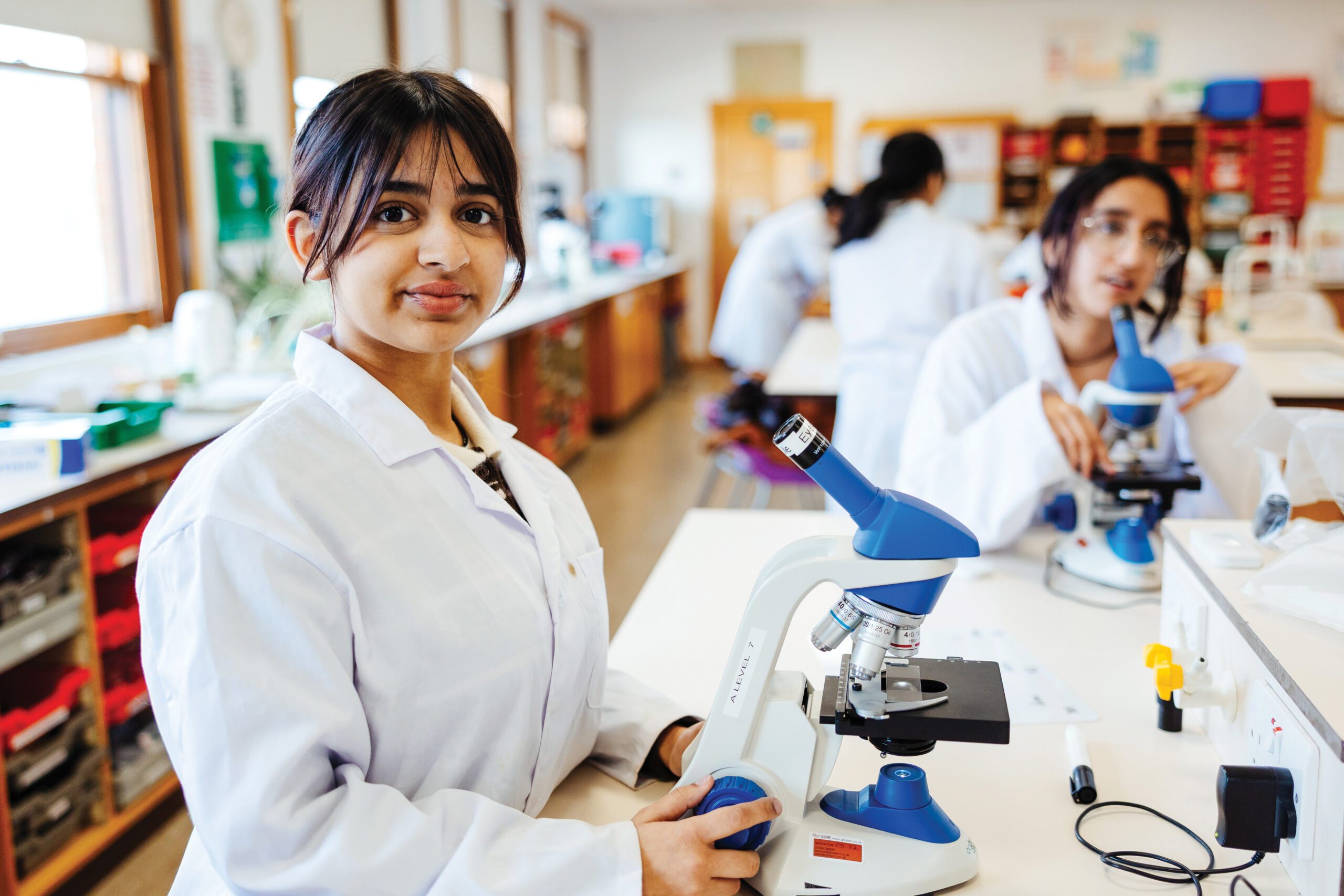
Choosing a school is one of the biggest decisions a parent will make, and for many families across Northamptonshire, that choice increasingly comes back to a single question: would my daughter do better in a girls-only environment? At Northampton High School, the answer is woven into everything the school does. Made for Girls is the philosophy behind it, and the evidence underpinning that idea is more substantial than a strapline might suggest.
Research has shown that girls’ self-confidence can begin to fall behind that of boys as early as age nine in mixed settings, and that gap has a habit of persisting well into adulthood. A 2019 University of Queensland study found that single-sex schools are the only setting in which this confidence gap simply does not open up. At Northampton High, that finding shapes everything from how lessons are taught to how wellbeing support is structured.
The Girls’ Day School Trust’s own research tells the same story on a bigger scale. Its 2024 report, Designing the Future of Girls’ Education, found that although every teenager’s confidence dips from around age 14, girls in single-sex schools bounce back faster than girls in mixed settings. Author and broadcaster Mary Ann Sieghart puts it simply in the same report: women spend a lifetime having to prove their competence in a way men rarely do, and that habit starts long before they leave school.
The wider GDST alumnae network tells a similar story. 83% say their school changed their life for the better, and 77% credit the girls-only environment specifically. The school points to these figures as evidence that removing gender from the classroom equation does more than feel reassuring. It changes outcomes.
Room to lead, without having to fight for it
Take mixed-sex social dynamics out of the equation and something interesting happens. Girls take the lead roles in the school play, the captaincy on the sports pitch, the solos in the concert and the top marks in physics, not because boys have been removed from competition, but because nobody is unconsciously stepping back to let someone else take the spotlight. Northampton High frames this as one of the most practical benefits of the model: more girls get the chance to discover they are good at things they might otherwise have assumed were not for them.
That plays out clearly in STEM subjects too. Nationally, fewer than 2% of girls take A Level physics compared with 6.5% of boys, according to the Institute of Physics. In single-sex independent schools, that figure jumps to 7.5%, a gap highlighted in GDST’s Designing the Future of Girls’ Education report. Across the Trust’s own schools, more than 60% of Year 13 students sit at least one STEM A Level, and 39% take maths, proof that ‘subjects for boys’ simply doesn’t register as a category.

An outdoor, hands-on approach to building self-belief
The Made for Girls ethos is not confined to the classroom. At Northampton High’s Forest School, a weekly fixture for every girl up to the end of Year 8, the link between physical confidence and academic confidence is taken seriously. Climbing, den-building, fire-lighting and mud-kitchen play are not simply outdoor fun. The school points to research connecting physical skills such as balance and cross-body coordination with the fine motor development needed for writing. Time outdoors also appears to lower anxiety and improve mood and memory, useful groundwork for a child about to head back into a maths lesson.
It is also, the school suggests, where some of the most natural mentoring happens. Older girls lead younger ones through a den-building challenge or a nature trail, building leadership instincts long before anyone puts a label on it.
Free to be themselves
There is also a quieter benefit that rarely makes the prospectus headlines: girls in single-sex schools are not making decisions, in class or out of it, with half an eye on how they will be perceived by boys. Gender stereotypes have less room to shape who puts their hand up, who chooses physics over art, or who feels able to be loud, messy, competitive or simply themselves. Pastoral and wellbeing programmes can be built around the priorities of girls specifically, rather than adapted from a generic template, which matters at an age when so much of growing up is about working out who you actually are, rather than who you think you are supposed to be.
What ties all of this together is a simple design principle: build the whole school environment, from nursery through to Sixth Form, around what helps girls flourish, rather than retrofitting a mixed model after the fact.
The Good Schools Guide described Northampton High in 2023 as the only all-girls, all-through school in the county, noting that it gives girls ‘a cracking start’ towards becoming the leaders of tomorrow.
For families weighing up school choices this year, the case is not purely sentimental. It is increasingly backed by data on confidence, leadership opportunity and academic performance: three things most parents would put near the top of their list, whatever school they eventually choose.
Northampton High School offers personal tours throughout the year, giving prospective families the chance to see the Made for Girls ethos in action, from the Forest School to the Sixth Form common room.
Scan the QR code to book a personal tour or visit their website for further information.
Link for QR code www.northamptonhigh.co.uk/admissions/open-events