

For more than four decades, organisations have relied on Belbin team role frameworks to enhance collaboration and performance. The logic is straightforward: identify people’s natural roles, assemble a balanced team, and group effectiveness will follow.
It’s simple. It’s memorable. It’s practical. It’s also increasingly limiting.
Most role-based models rely on an underlying assumption – that individuals have stable behavioural identities that can be labelled and optimised. Once someone is seen as a ‘Coordinator’ or an ‘Implementer’, the label becomes fixed, self-fulfilling and over time, the role hardens into identity.
t is not that these descriptions are wrong. The problem is that they lead organisations to manage assuming fixed traits rather than developing and expanding capability.
In reality what happens?
- People avoid behaviours outside their ‘type’
- Work is allocated according to labels rather than potential
- Personal development conversations are limited
- Teams are optimised for balance rather than growth
What starts as an insight about an individual then turns into a ceiling.

Personality or habit
In daily working life, behaviour is much more fluid than such typologies suggest. One individual may seem cautious and analytical in one setting, yet strategic and visionary in another. Someone who is a collaborative contributor early in their career may later become decisive and authoritative. Context, experience and confidence shape behaviour way more than static categories imply. What we usually interpret as personality may simply be habit – but habits can change. This distinction, though, is critical for leadership development. When behaviour is seen as fixed, aspiring leaders internalise self-limiting narratives, such as:
- I’m not strategic
- I’m not creative
- I’m not a natural leader
These statements sound factual and truisms. In reality, they are only developmental snapshots.
Types or stages?
Team role frameworks such as Belbin’s were developed through observing clusters of behaviour. But this sort of behavioural clustering does not necessarily mean there are distinct kinds of people. It simply means that individuals with similar levels of confidence, maturity and/or thinking styles are likely to respond in similar ways.
What look like personality types may actually just be stages. As people mature, gain experience and develop:
- Behavioural ranges expand
- Emotional reactions reduce
- Context awareness improves
- Adaptability increases
Rather than presenting one consistent role, they move between styles depending on what the situation requires. This reframes behaviour as ‘developmental’ rather than ‘deterministic’ – a subtle yet very powerful shift.
What businesses actually need
Organisations now operate in volatile, complex systems, requiring leaders who can:
- Shift from analysis to action
- Balance challenge with support
- Move between tactics and strategy
- Adjust management style to context
Static labels struggle to address and respond to this. In many cases, they inhibit it.
At Be. Partners, our work in responsible leadership and inclusive growth consistently shows that sustainable high performance depends much less on assembling the ‘right mix’ of types and more on nurturing each employee’s thinking or cognitive repertoire. Whether working with boards, leadership teams or regional/multi-stakeholder coalitions, the key differentiators are capacity, capability and adaptability.
The best question is not: ‘Which role is this person?’, it is: ‘How flexibly can this person think, learn and respond?’ The first question categorises. The second one develops. Frameworks such as Belbin’s helped management recognise behavioural diversity. This historic contribution was valuable. In today’s complex, fast- moving world, however, they risk oversimplifying the very capability organisations must cultivate: complex adaptive thinking.
Effectiveness is less about fitting people into boxes and more about preparing them to step out of and beyond their habitual responses. If we want resilient organisations, credible leaders and genuinely inclusive growth, we should stop putting people into boxes and start helping them out-think boxes altogether.
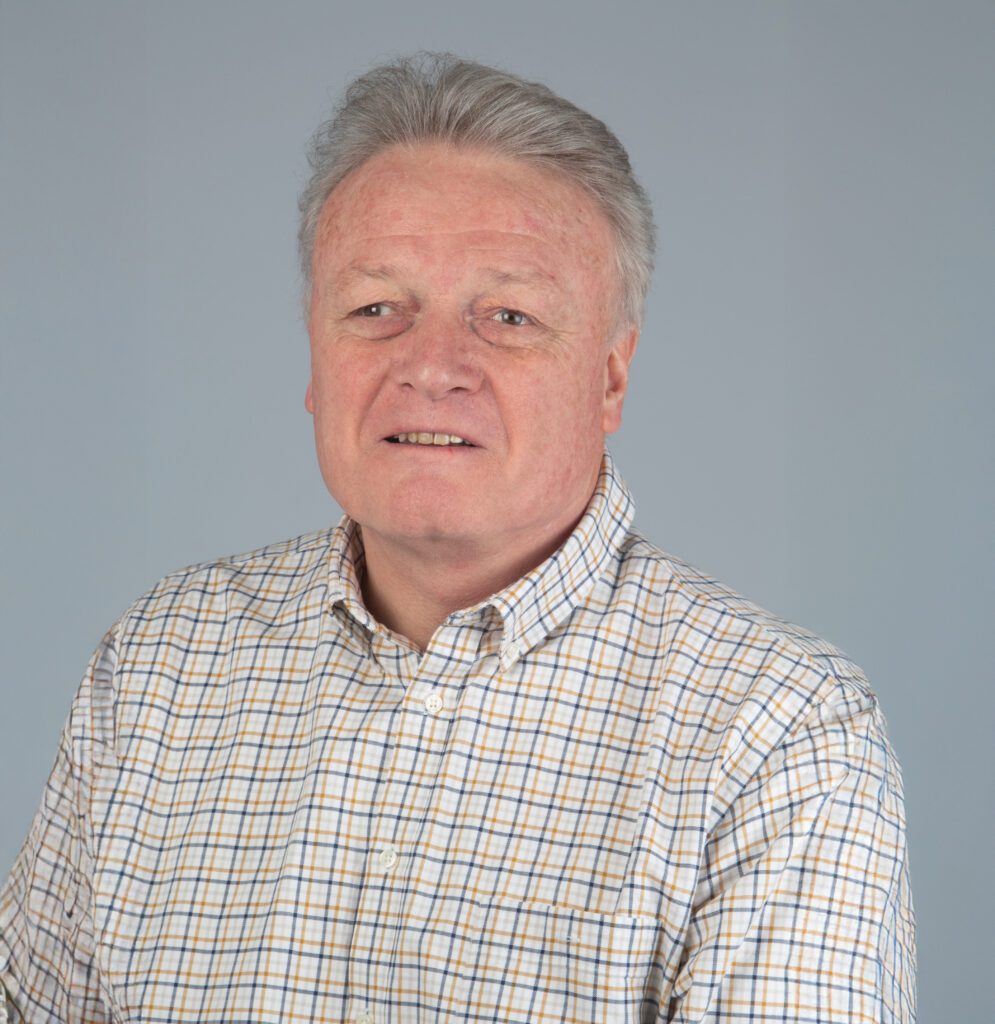
Adrian Pryce DL, Chair at Be. Partners Ltd and Chair of the IoD Sustainability Group.
Dr Darren Stevens, Developmental Psychologist at the Institute for Adult Development.
Find out more on the Adult Development Institute website. For more information, contact Adrian via adrian@bepartners.org or via the Be. Partners website.